


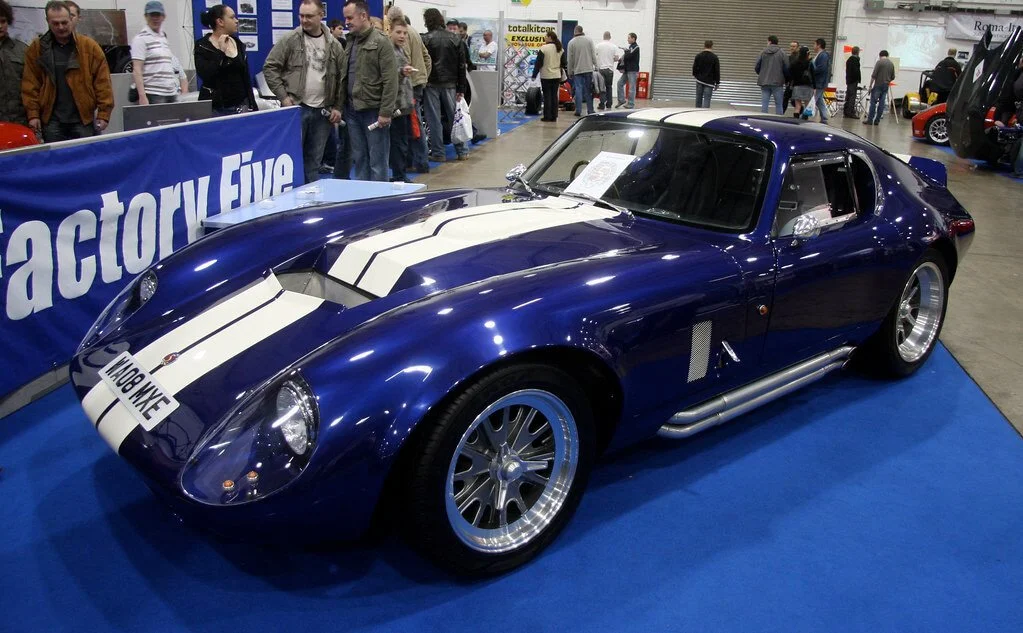
I was at a Cars and Coffee event in Carlsbad recently when I saw a shimmering Shelby Cobra replica. It looked like a 1965 masterpiece, but I knew from the sound of the modern fuel-injected engine that it was a recent build. The owner told me he had just finished his “SB 100” process. For those of us in the San Diego car scene, those five letters are the difference between a street-legal dream and a permanent garage queen.
In 2026, California remains one of the few places where you can build a car from scratch—a “Specially Constructed Vehicle” (SPCNS)—and legally drive it on the 101. But if you don’t follow the specific sequence of the SB 100 (Senate Bill 100) process, you could end up with a vehicle that is forced to meet 2026 emissions standards, which is nearly impossible for a backyard build.
The Golden Ticket: The First-Come, First-Served Race
Every year on January 1st, the California DMV releases exactly 500 sequences for the SB 100 program. These are the “Golden Tickets” of the automotive world. This sequence allows you to choose how your car is smogged: based on the body style (e.g., a 1965 Cobra) or the engine year.
I’ve known builders in Chula Vista who camp out at the DMV on New Year’s Day just to ensure they are among the first 500. By 2026, the demand has only grown. If you miss that initial window, you have to wait an entire year to register your kit car. Without that SB 100 sequence number, your car is treated as a 2026 model, requiring modern catalytic converters, charcoal canisters, and complex ECU tuning.
The SB 100 Registration Path
| Step | Action | Why It’s Crucial |
| 1. The DMV | Submit “Application for Registration” (REG 343). | Secures your spot in the 500-sequence limit. |
| 2. The CHP | Visit a California Highway Patrol office for a VIN. | They verify the receipts for your frame and engine. |
| 3. The Referee | Schedule a “Specially Constructed” inspection. | They determine which emissions year applies to your car. |
| 4. The Tag | Return to the DMV for your plates. | You are now legally “exempt” as a 1960s-era vehicle. |
I always recommend the “1965 or older” exemption. Under SB 100, if your car looks like a vintage model, the Referee can classify it as such. This means you only need to meet the emissions standards of a 1965 car—which basically means having a closed crankcase (PCV valve). No smog check, ever again.
Why “Motor Swaps” are the New Headache in 2026
Maybe you aren’t building a kit car. Maybe you’re just trying to put a modern LS engine into your 1988 Chevy truck. In San Diego, we call this a “Frankenstein” build, and the BAR (Bureau of Automotive Repair) has become incredibly tech-savvy about it in 2026.
I’ve seen a lot of guys buy an engine from a salvaged 2022 Corvette and drop it into a 1990 chassis. The rule is simple but brutal: The engine must be the same year or newer than the chassis. You can’t put a 1990 engine into a 2010 car. Furthermore, you must carry over every emissions component from the donor car.
Common “Swap” Failures in San Diego
| Component | Failure Reason | The 2026 Reality |
| Check Engine Light | Not wired or incompatible. | Must be functional and visible on the dash. |
| OBD-II Port | Missing or unpowered. | The Referee must be able to plug in and see the donor car’s VIN. |
| Catalytic Converter | Wrong location or type. | Must be in the same relative position as the donor car. |
| Gas Tank | No EVAP pressure sensor. | Modern engines require the donor car’s fuel vapor system. |
If you’re doing a swap in your garage in El Cajon, keep every receipt. The Referee will want to see the VIN of the car the engine came from. If you can’t prove where the engine originated, they won’t even start the inspection.
Choosing the Right San Diego Smog Check Location for “Unusual” Cars
If you have a modified car that isn’t a kit car—say, a Subaru with a different turbo or a Honda with an intake—you shouldn’t just pull into any smog check location. Many general shops will see a modified part and fail you immediately just to be safe.
You need a shop that understands CARB Executive Orders (EO). Every legal aftermarket part in California has an EO number. I always suggest having your paperwork ready. If the technician says, “That intake is illegal,” you can calmly show them the sticker or the printout from the manufacturer.
Where to go for Modified Vehicles
- Convoy Street Area: Great for Japanese imports and “tuner” culture.
- Miramar: Best for domestic muscle and heavy engine work.
- National City: Good for older classic-restomod hybrids.
When you call for a smog check discount, ask specifically: “Are you comfortable checking CARB EO numbers on aftermarket parts?” If they hesitate, hang up. You want a tech who knows the difference between a “cold air intake” and a “racing-only” modification.
The 2026 “Visual” Trap: The Rise of the AI Inspection
One thing I’ve noticed in 2026 is that many San Diego stations are now using high-resolution cameras that feed into a BAR database. This “AI-assisted” visual inspection can spot a missing EGR valve or an incorrectly routed vacuum hose faster than a human ever could.
I recently saw a guy fail because his vacuum hose was blue instead of black, and the camera flagged it as “potentially non-stock.” It sounds ridiculous, but the state is cracking down on anything that looks like a modification. If you’ve replaced your hoses, use standard black rubber. Don’t give the computer a reason to flag you.
Pre-Inspection Tips for Modified Cars
- Hide the “Bling”: If you have flashy blue or red silicone hoses, consider switching back to black for the test.
- Clean the Engine: A greasy engine hides leaks, but it also makes the tech suspicious. A clean engine shows you care about maintenance.
- The Sticker Hunt: Make sure every aftermarket part has its CARB EO sticker clearly visible. If it’s covered in dirt, wipe it off.
What to Do if the Referee Rejects You
It happens. Even the best builds can get a “Reject” notice from the Referee. In San Diego, the most common reason is “Incomplete OBD-II Monitors.” Modern engines in old cars often struggle to “complete” their self-checks because the car doesn’t weigh the same or have the same aerodynamic drag as the donor car.
If this happens, the smog check discount Referee might give you a “Drive Cycle” instruction. This is a specific set of driving maneuvers (e.g., “Drive at 55 mph for 10 minutes, then idle for 2 minutes”). I’ve spent many late nights on the I-8 East toward Alpine just trying to get a stubborn Catalyst monitor to set.
Final Advice for the San Diego Builder
Building a car in San Diego is a labor of love, but the “paperwork phase” is just as important as the “wrenching phase.” If you are starting a kit car or a swap in 2026, document everything. Take photos of the engine before it goes in. Keep the VIN from the donor car.
Check for a smog check discount on the initial inspection, but be prepared to pay the full Referee fee—it’s worth every penny to have a legally registered vehicle. Whether you’re cruising down Sunset Cliffs in a Cobra or a swapped C10 truck, knowing you are 100% legal makes the drive that much sweeter. Stay patient, follow the SB 100 steps, and I’ll see you at the next car meet.
